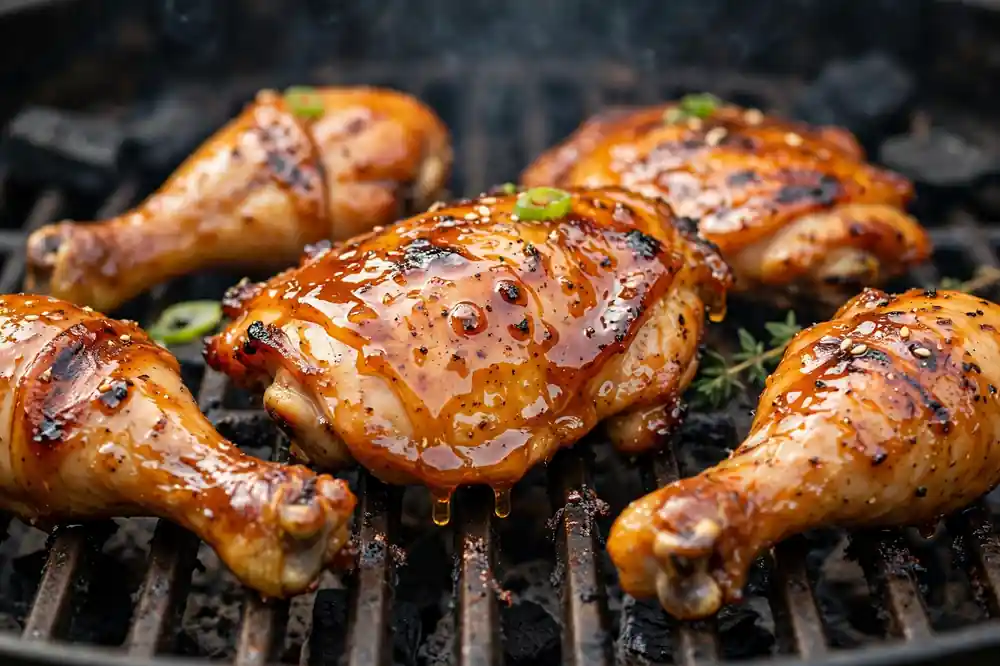

There is something about the smell of honey barbecue chicken on a hot grill that tells everyone in the neighborhood dinner is almost ready. Sweet honey caramelizes over the heat, smoky barbecue sauce clings to every bite, and the chicken stays juicy inside with lightly charred edges outside. This honey BBQ chicken recipe is the one I reach for all summer long, and it works just as well on a gas grill, a charcoal grill, or a grill pan when the weather turns. The sauce is simple, the marinade does most of the work, and the chicken comes off the grill glossy, sticky, and full of flavor.
Why This Recipe Works
The secret to great honey barbecue chicken is balance. Honey brings sweetness and helps the sauce caramelize, but on its own it can burn quickly over high heat. Barbecue sauce adds tang, smoke, and body, while a little vinegar and mustard keep the sweetness from taking over. Together they form a glaze that thickens as it cooks instead of sliding off the chicken. The marinade works on two levels. First, the oil and seasonings coat the chicken and help it brown evenly. Second, the salt and acid in the marinade season the meat all the way through, so every bite is flavorful, not just the surface. The recipe also uses a two-stage saucing method: a light coat goes on early to build flavor, and a final generous coat goes on near the end so the honey can set into a shiny glaze without burning. Resting the chicken for five minutes after grilling is the final step that makes a real difference, because it lets the juices settle back into the meat instead of running out onto the cutting board.
Ingredients
- 2 pounds boneless, skinless chicken breasts or thighs, trimmed
- 1/2 cup barbecue sauce, your favorite store-bought or homemade style
- 1/4 cup honey
- 2 tablespoons olive oil
- 2 tablespoons apple cider vinegar
- 1 tablespoon Dijon mustard
- 1 tablespoon soy sauce
- 2 teaspoons garlic powder
- 1 teaspoon smoked paprika
- 1 teaspoon onion powder
- 1/2 teaspoon black pepper
- 1 teaspoon kosher salt
- 1/4 teaspoon cayenne pepper, optional, for a little heat
- 1 tablespoon vegetable oil, for oiling the grill grates
- 2 tablespoons chopped fresh parsley, for serving, optional
Instructions
- Make the honey barbecue sauce. In a medium bowl, whisk together the barbecue sauce, honey, apple cider vinegar, Dijon mustard, and soy sauce until smooth. Set aside about 1/3 cup of this sauce in a small bowl for serving at the table. The rest will be used for marinating and basting.
- Season the chicken. Pat the chicken dry with paper towels, which helps the marinade cling and the surface brown. In a large bowl or resealable bag, combine the olive oil, garlic powder, smoked paprika, onion powder, salt, black pepper, and cayenne if using. Add the chicken and toss until every piece is evenly coated.
- Marinate the chicken. Pour half of the remaining honey barbecue sauce over the seasoned chicken and turn the pieces to coat them well. Cover the bowl or seal the bag and refrigerate for at least 30 minutes, or up to 4 hours. If you are short on time, even 15 minutes will add flavor, but the longer marinade gives a deeper taste.
- Preheat the grill. Heat a gas grill to medium-high, about 400 to 425 degrees Fahrenheit, or prepare a charcoal grill for two-zone cooking with hot coals on one side and a cooler side. Clean the grates well with a grill brush, then oil them lightly with vegetable oil on a folded paper towel held with tongs.
- Grill the first side. Remove the chicken from the marinade and let any excess drip off. Discard the used marinade. Place the chicken on the hot side of the grill and cook for 5 to 6 minutes without moving it. Leaving it alone lets a good sear form and keeps the chicken from sticking.
- Flip and brush with sauce. Turn the chicken over and brush the cooked side generously with some of the reserved basting sauce. Cook for another 5 to 6 minutes. The chicken should be developing dark grill marks and the sauce should be starting to thicken and cling.
- Finish with a final glaze. When the chicken is almost done, brush on one more coat of sauce and cook for 1 to 2 minutes per side, just until the glaze is shiny and lightly caramelized at the edges. Watch it closely at this stage, because honey can go from golden to burnt quickly over high heat. Move the chicken to the cooler side of the grill if the sauce starts to darken too fast.
- Check the temperature. The chicken is done when the thickest part reaches 165 degrees Fahrenheit on an instant-read thermometer. If you do not have a thermometer, cut into the thickest piece and check that the juices run clear and there is no pink in the center.
- Rest the chicken. Transfer the grilled chicken to a clean plate or cutting board and tent it loosely with foil. Let it rest for 5 minutes so the juices redistribute through the meat. This short wait makes the chicken noticeably juicier.
- Serve. Slice or serve the chicken whole, spoon the reserved table sauce over the top, and sprinkle with chopped parsley if you like. Serve hot with your favorite cookout sides.
Tips for the Best Results
Start with chicken pieces that are similar in size and thickness so they finish cooking at the same time. If your chicken breasts are very thick on one end, pound them gently to an even thickness of about 3/4 inch with a meat mallet or rolling pin before marinating. This one step prevents dry, overcooked thin ends and undercooked thick centers. Keep the grill lid closed as much as possible while cooking, since it holds the heat steady and helps the chicken cook through evenly. Resist the urge to press down on the chicken with a spatula, because that squeezes out the juices you want to keep. Sauce timing matters more than anything else in this recipe. Adding all the honey sauce at the very beginning will burn it, so save the heavy glazing for the last few minutes. If flare-ups happen, move the chicken to the cooler side of the grill until the flames settle. Finally, always use a separate clean brush and a fresh bowl of sauce for the final glaze and table sauce, never the bowl that held raw chicken marinade.
Variations
This recipe is easy to adjust to your taste. For a spicier version, add a tablespoon of hot sauce or an extra 1/2 teaspoon of cayenne to the sauce, or use a spicy barbecue sauce as the base. For a smokier flavor, add 1/2 teaspoon of chipotle powder or a few drops of liquid smoke to the marinade. If you prefer a tangier glaze, increase the apple cider vinegar to 3 tablespoons and cut the honey back to 3 tablespoons. Bone-in chicken works well too, though it needs more time: bone-in thighs take about 8 to 10 minutes per side over medium heat, and bone-in breasts take even longer, so keep the heat moderate and use the cooler side of the grill to finish them without burning the sauce. You can also make this recipe in the oven if grilling is not an option. Bake the marinated chicken on a lined sheet pan at 425 degrees Fahrenheit for 20 to 25 minutes, brushing with sauce in the last 5 minutes, then broil for 1 to 2 minutes to caramelize the glaze.
Serving Suggestions
Honey BBQ chicken is a natural fit for classic cookout sides. Serve it with creamy coleslaw, corn on the cob, baked beans, potato salad, or a simple green salad with ranch dressing. Grilled vegetables such as zucchini, bell peppers, and red onions pick up the same smoky flavor and cook right alongside the chicken. For a heartier meal, pile sliced chicken onto toasted buns with extra sauce and pickles for easy barbecue chicken sandwiches, or slice it over a bed of rice with grilled corn and black beans for a barbecue chicken bowl. Leftovers are just as useful: slice the chicken thin for wraps, chop it into a chopped salad, or tuck it into quesadillas with cheese and a drizzle of barbecue sauce.
Storage and Reheating
Let leftover chicken cool to room temperature, then store it in an airtight container in the refrigerator for up to 4 days. Keep any extra sauce in a separate small container so the chicken does not get soggy. To reheat, warm the chicken gently in a covered skillet over medium-low heat with a spoonful of sauce or a splash of water, which keeps it moist. You can also reheat it in the microwave in 30-second bursts, covered loosely, until heated through. For the best texture, avoid reheating at high heat, which dries out grilled chicken quickly. Leftover honey BBQ chicken also freezes well. Wrap individual pieces tightly in plastic wrap, place them in a freezer bag, and freeze for up to 3 months. Thaw overnight in the refrigerator before reheating.
Frequently Asked Questions
Can I use chicken thighs instead of chicken breasts?
Yes, boneless skinless thighs are an excellent choice for this recipe. They stay juicier than breasts because they have a little more fat, and they are more forgiving if they cook a minute or two longer. Use the same marinade and sauce, and cook them for about 5 to 6 minutes per side, checking that the internal temperature reaches 165 degrees Fahrenheit.
How do I keep the honey sauce from burning on the grill?
The key is timing. Do not brush on thick layers of honey sauce at the start of cooking. Let the chicken cook most of the way with just the marinade, then add the sauce in the last few minutes when the chicken is almost done. Keep the heat at medium-high rather than high, and move the chicken to a cooler part of the grill if the sauce darkens too quickly.
Can I make the honey barbecue sauce ahead of time?
Yes, the sauce keeps well. Whisk it together and store it in a sealed jar or container in the refrigerator for up to 1 week. Stir it before using, since the honey can settle.
What temperature should grilled chicken reach?
Chicken is safe to eat when the thickest part reaches 165 degrees Fahrenheit on an instant-read thermometer. Insert the thermometer into the center of the thickest piece, away from any bone. Taking the chicken off the grill right at 165 degrees keeps it juicy, while cooking it much past that temperature can dry it out.
Can I cook this recipe indoors without a grill?
Yes. A cast iron grill pan on the stove works well: heat it over medium-high heat, oil it lightly, and cook the chicken for 5 to 6 minutes per side, glazing near the end. You can also bake the chicken at 425 degrees Fahrenheit for 20 to 25 minutes and finish it under the broiler for 1 to 2 minutes to caramelize the sauce.
Recipe at a Glance
Prep time is 10 minutes, plus 30 minutes to 4 hours of marinating time. Cook time is about 12 to 15 minutes on the grill. This recipe serves 4 people, with about 2 chicken pieces per serving. It works on a gas grill, a charcoal grill, or a grill pan, and the sauce can be made up to a week ahead.