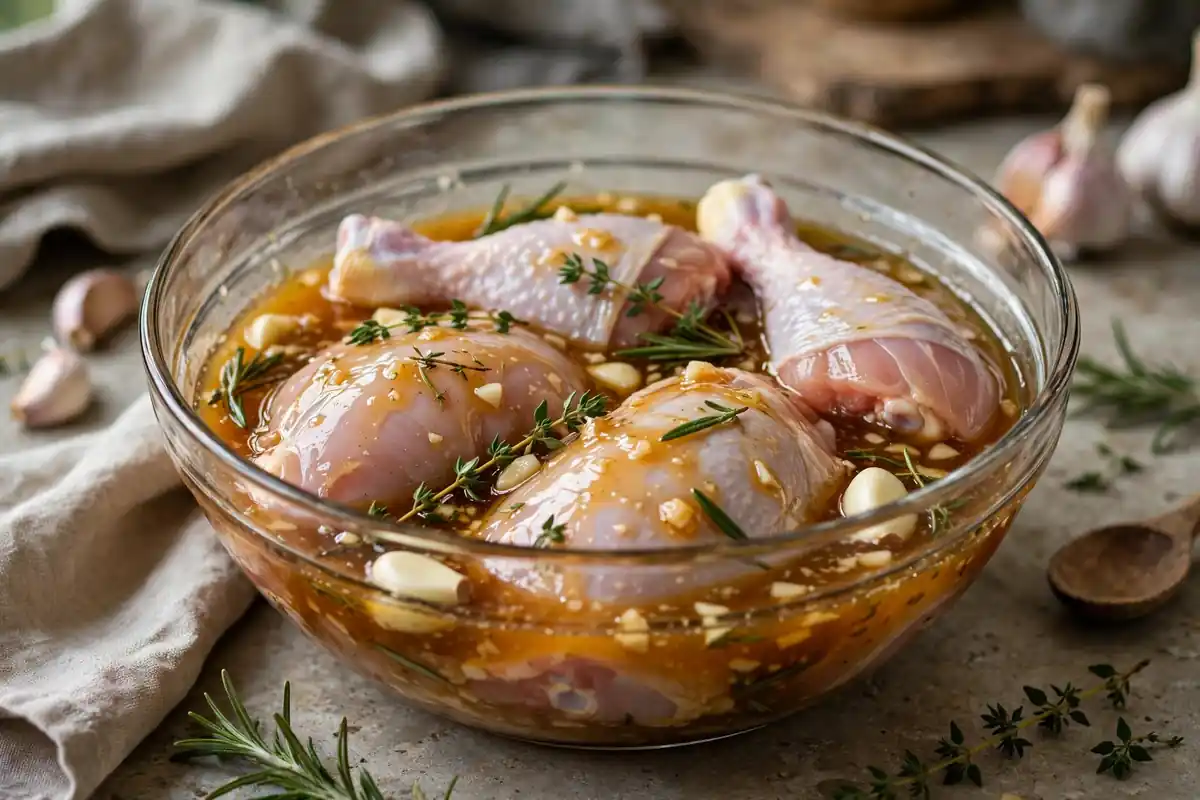

Ask any backyard griller what makes the difference between dry, forgettable chicken and the kind people ask about, and the answer is almost always the same: the marinade. A good marinade does three jobs at once. It adds flavor deep into the meat, it helps the surface brown and caramelize on the grill, and it protects the chicken from drying out over high heat. This guide walks you through exactly how to marinate chicken for the grill, step by step, with no guesswork. You will learn which cuts need how much time, how to keep everything food safe, and how to grill the chicken so it comes out juicy every time. It also includes three complete honey marinade recipes: a savory honey garlic, a bright honey lime, and a classic honey mustard. Each one uses simple pantry ingredients, takes five minutes to mix, and works on breasts, thighs, drumsticks, and wings.
Why This Recipe Works
Marinating works because of balance. Acid, salt, oil, and sweetness each play a role, and this guide keeps them in the right proportions. A little acid from citrus juice or vinegar brightens the flavor and helps tenderize the surface, but too much acid or too much time can make chicken mushy, so the recipes below use just enough. Salt seasons the meat all the way through and helps it hold on to moisture during grilling. Oil carries flavor, keeps the marinade clinging to the chicken, and helps prevent sticking on the grill grates. Honey adds sweetness that balances salty and tangy notes, and it caramelizes into a golden crust. The three marinades are built on that same balanced base, so they are reliable and forgiving. They also follow safe marinating rules: always in the refrigerator, never reused after touching raw chicken, and always with a separate portion saved for brushing if you want a glaze.
Recipe at a Glance
Prep time: 10 minutes, plus marinating time. Marinating time: 30 minutes to 4 hours, depending on the cut. Cook time: 12 to 25 minutes, depending on the cut. Servings: each marinade below makes enough for about 2 pounds of chicken, or 4 servings.
Ingredients
Pick one marinade below for each batch of chicken. Each recipe makes about 3/4 cup, enough for 2 pounds of chicken. You will also need 2 pounds of chicken, your choice of boneless skinless breasts, boneless or bone-in thighs, drumsticks, or wings, plus salt and pepper to taste before grilling.
Honey Garlic Marinade:
- 1/3 cup honey
- 1/4 cup soy sauce, low sodium if you prefer
- 3 tablespoons olive oil
- 2 tablespoons apple cider vinegar
- 4 cloves garlic, minced, or 1 teaspoon garlic powder
- 1 teaspoon grated fresh ginger, or 1/2 teaspoon ground ginger
- 1/2 teaspoon black pepper, freshly ground
- 1/2 teaspoon smoked paprika
Honey Lime Marinade:
- 1/3 cup honey
- 1/4 cup fresh lime juice, from about 2 limes
- 1 tablespoon lime zest
- 3 tablespoons olive oil
- 2 cloves garlic, minced
- 1 teaspoon chili powder
- 1/2 teaspoon ground cumin
- 1/2 teaspoon kosher salt
- 1/4 teaspoon crushed red pepper flakes, optional
- 2 tablespoons chopped fresh cilantro, for serving
Honey Mustard Marinade:
- 1/3 cup honey
- 1/4 cup Dijon mustard
- 2 tablespoons whole grain mustard
- 2 tablespoons apple cider vinegar
- 3 tablespoons olive oil
- 1 tablespoon soy sauce
- 2 cloves garlic, minced
- 1/2 teaspoon onion powder
- 1/2 teaspoon black pepper, freshly ground
- 1/2 teaspoon kosher salt
Instructions
- Choose your chicken and marinade. Decide which cut you are grilling and which of the three marinades fits your meal. Boneless breasts cook fastest and suit all three marinades. Thighs stay juicier and are very forgiving. Drumsticks and wings are great for cookouts and love the honey garlic and honey lime versions. Pat the chicken dry with paper towels so the marinade clings well.
- Mix the marinade. In a medium bowl, whisk together all the ingredients for your chosen marinade until the honey is fully dissolved and the mixture looks smooth. Taste it with a clean spoon. It should taste a little stronger than you want the finished chicken to taste, because the flavor mellows as it soaks in and cooks.
- Set aside some marinade for glazing, if you want it. Before the marinade touches raw chicken, spoon about 1/4 cup into a small bowl and refrigerate it separately. This reserved portion is safe to brush on during grilling or to warm and serve as a sauce. Never use marinade that has touched raw chicken as a glaze or a serving sauce.
- Marinate the chicken. Place the chicken in a large bowl, a shallow dish, or a zip-top bag, and pour the remaining marinade over it. Turn each piece to coat it well on all sides. Seal the bag, squeezing out excess air, or cover the bowl tightly. Always marinate in the refrigerator, never on the kitchen counter.
- Follow the right marinating time for your cut. Boneless skinless chicken breasts need 30 minutes to 2 hours. Boneless thighs need 30 minutes to 4 hours. Bone-in thighs, drumsticks, and wings need 1 to 4 hours. Do not marinate chicken for more than 4 hours total, and keep citrus-based marinades, like the honey lime, to 2 hours or less, because the acid can make the surface soft if left too long.
- Prepare the grill for two-zone cooking. For a gas grill, set one side to medium-high heat, about 400 to 425 degrees Fahrenheit, and leave the other side on low or off. For a charcoal grill, bank the hot coals to one side. Clean the grates with a brush, then oil them lightly with a paper towel dipped in vegetable oil held with tongs.
- Take the chicken out of the marinade. Remove the chicken from the refrigerator about 10 to 15 minutes before grilling so it loses the chill and cooks more evenly. Let the excess marinade drip off, and discard the used marinade. Do not rinse the chicken; rinsing spreads bacteria around the sink and washes flavor away.
- Grill over direct heat first. Place the chicken on the hot side of the grill. For boneless breasts, cook 5 to 6 minutes per side. For boneless thighs, cook 5 to 7 minutes per side. For bone-in pieces and wings, cook 5 minutes per side, then move them to finish. Close the lid between flips. If flare-ups happen, slide the chicken to the cooler side until the flames settle.
- Finish on indirect heat and check the temperature. Move the chicken to the cooler side, brush it lightly with the reserved glaze if you saved some, and close the lid. Cook until an instant-read thermometer reads 165 degrees Fahrenheit in the thickest part, away from any bone. Boneless breasts usually need 12 to 15 minutes total, thighs 15 to 20 minutes, and bone-in pieces and wings 20 to 25 minutes.
- Rest and serve. Transfer the chicken to a clean plate, not the plate that held raw chicken, and tent it loosely with foil. Rest boneless pieces for 5 minutes and bone-in pieces for 5 to 10 minutes. Resting lets the juices settle so the chicken stays moist when you slice it. Sprinkle with fresh herbs and serve warm.
Tips for the Best Results
Start with chicken that is not too cold and not too wet. Patting it dry helps the marinade stick and helps the surface brown instead of steam. Use a zip-top bag for marinating when you can, because it keeps the chicken fully coated with less marinade and makes cleanup easy. Do not over-marinate, especially with the honey lime version; set a timer so you do not forget a batch in the fridge overnight. Keep the grill lid closed as much as possible for even heat, and use an instant-read thermometer every time. Time alone is not reliable because breast thickness and grill heat vary, but 165 degrees Fahrenheit is always the target for chicken. Oil the grates well, and resist the urge to move the chicken constantly. Let it sit long enough to form a crust, then flip once or twice only.
Variations
Once you know the base method, the variations are easy. For a spicy honey garlic chicken, add one tablespoon of sriracha or one teaspoon of crushed red pepper flakes to the honey garlic marinade. For a smoky version, add one teaspoon of smoked paprika and a half teaspoon of chipotle powder to any of the three marinades. For a kid-friendly honey mustard, use yellow mustard instead of Dijon for a milder, sweeter flavor. You can also swap the protein: these marinades work well on pork chops, pork tenderloin, and shrimp. For shrimp, marinate for only 15 to 20 minutes and grill for 2 to 3 minutes per side. For a lower-sugar option, cut the honey in any recipe to 1/4 cup and add an extra tablespoon of olive oil. In winter, the same method works in a cast iron grill pan on the stove, finished in a 400 degree Fahrenheit oven until the chicken reaches 165 degrees.
Serving Suggestions
Grilled marinated chicken is one of the most versatile mains you can make. Serve honey garlic chicken with steamed rice, roasted broccoli, and a simple cucumber salad. Honey lime chicken is perfect with cilantro lime rice, black beans, grilled corn, and warm tortillas for an easy taco night. Honey mustard chicken pairs well with mashed potatoes, green beans, and a crisp garden salad, or sliced over a Caesar-style salad for lunch. All three versions are great at a cookout with baked potatoes, coleslaw, baked beans, and cornbread. For leftovers, slice the chicken and use it in sandwiches, wraps, grain bowls, or on top of a fresh salad the next day.
Storage and Reheating
Store leftover grilled chicken in an airtight container in the refrigerator for up to 3 to 4 days. Let it cool to room temperature before sealing, and keep any extra glaze in a separate small container. To reheat, warm the chicken gently so it stays moist. Slice it first if it is a thick breast, then warm it in a covered skillet over medium-low heat with a splash of water or chicken broth for 3 to 4 minutes. You can also reheat it in a 325 degree Fahrenheit oven, wrapped in foil, for 10 to 12 minutes. Avoid the microwave when you can, but if you use it, heat in short 30-second bursts at half power. Leftover chicken freezes well for up to 2 months: wrap pieces individually in plastic wrap, then place them in a freezer bag. Thaw overnight in the refrigerator before reheating.
Frequently Asked Questions
How long should I marinate chicken for the grill?
It depends on the cut. Boneless breasts need 30 minutes to 2 hours, boneless thighs 30 minutes to 4 hours, and bone-in pieces, drumsticks, and wings 1 to 4 hours. Citrus marinades should stay under 2 hours. Even 30 minutes makes a real difference.
Can I marinate chicken overnight?
It is best not to. Marinating chicken overnight, especially in an acidic marinade with citrus juice or vinegar, can make the surface soft and mushy. Four hours is the safe maximum for these recipes, and two hours is plenty for most cuts.
Is it safe to reuse marinade as a sauce?
No, never reuse marinade that has touched raw chicken. Raw chicken can carry bacteria, and the used marinade is not safe to serve as-is. If you want a glaze or sauce, set some marinade aside before it touches the chicken, as described in step 3.
What temperature should grilled chicken reach?
Chicken is done when an instant-read thermometer reads 165 degrees Fahrenheit in the thickest part, away from the bone. Always check the thickest piece, and check more than one piece if you are grilling a batch.
Can I marinate frozen chicken?
No. Thaw the chicken completely in the refrigerator first, then marinate it. Marinade cannot soak into frozen meat, and partially frozen chicken cooks unevenly on the grill. Plan ahead and thaw overnight in the fridge.