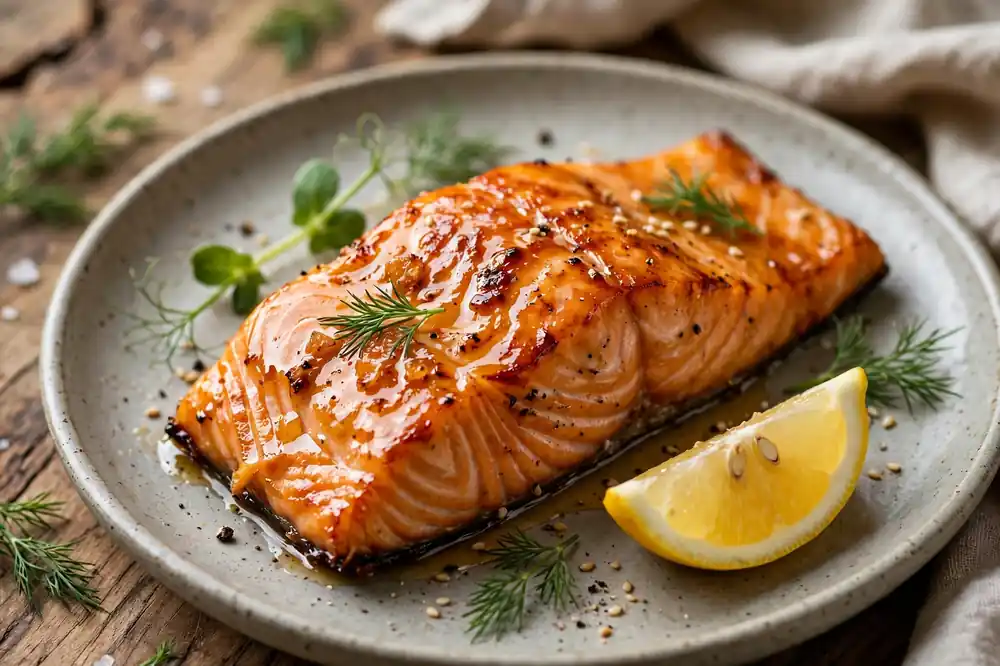

Honey glazed salmon is a weeknight dinner that feels a little special without asking for much work. The salmon cooks in about ten minutes, the glaze comes together in one small bowl, and the result is a fillet that is golden outside, tender and flaky inside, and coated in a sweet and savory sauce. Honey gives the glaze its shine and gentle sweetness, soy sauce adds salt and depth, garlic brings warmth, and lemon at the end keeps everything bright. It works on a busy Tuesday and is also good enough for guests on a Friday night with rice and vegetables. It works in a skillet, on the grill, or in the oven, and this version uses a skillet because it gives the best control over the glaze. The sauce thickens as the salmon cooks, so you can spoon it right over the fillets and serve them with very little fuss.
Recipe at a Glance
Prep time is 10 minutes, cook time is 10 to 12 minutes, and the total time is about 20 to 22 minutes. This recipe makes 4 servings, one salmon fillet per person. It is easy to double for a larger family, and the glaze can be mixed ahead and kept in the refrigerator for up to 2 days.
Why This Recipe Works
The glaze in this recipe is balanced, not just sweet. Honey alone would be too sweet and would burn quickly in a hot pan, but soy sauce, garlic, and lemon juice round it out and keep the flavor interesting. The soy sauce adds salt and a savory note that makes the honey taste richer, while the garlic softens in the heat and adds warmth without overpowering the fish. A little Dijon mustard helps the glaze cling to the salmon and adds a mild tang. When the glaze hits the hot skillet, it bubbles and thickens into a shiny sauce that coats the fish instead of sliding off.
Cooking the salmon in a skillet also gives you better control than baking alone. You can see the color change as the fish cooks, and you can spoon the glaze over the top while it finishes. Starting the salmon skin side down, if your fillets have skin, helps the skin crisp up and protects the flesh from the direct heat of the pan. Flipping the salmon once, gently, keeps the fillet intact and gives both sides a chance to brown. The salmon is done when it flakes easily with a fork but is still moist in the center. Overcooking is the most common mistake with salmon, so this recipe keeps the cook time short and the heat at medium-high rather than high.
Ingredients
- 4 salmon fillets, about 6 ounces each, skin on or skin off
- 1/2 teaspoon kosher salt
- 1/4 teaspoon black pepper
- 1 tablespoon olive oil
- 3 tablespoons honey
- 2 tablespoons low-sodium soy sauce
- 1 tablespoon fresh lemon juice
- 1 teaspoon Dijon mustard
- 3 cloves garlic, minced
- 1/2 teaspoon grated fresh ginger, optional
- 1/4 teaspoon red pepper flakes, optional
- 1 tablespoon chopped fresh parsley or green onions, for serving
- Lemon wedges, for serving
Instructions
- Take the salmon out of the refrigerator 15 minutes before cooking so it can lose some of its chill. Pat each fillet dry on all sides with paper towels. Dry fish browns better and sticks less in the pan, so do not skip this step. Season both sides evenly with salt and black pepper.
- Make the glaze in a small bowl. Whisk together the honey, soy sauce, lemon juice, Dijon mustard, minced garlic, grated ginger if using, and red pepper flakes if using. Stir until the honey is fully mixed in and the sauce looks smooth. Set the bowl near the stove so it is ready when you need it.
- Heat a large skillet over medium-high heat and add the olive oil. Let the oil get hot but not smoking, about 1 to 2 minutes. A hot pan is important for a good sear, so give it time to heat fully before the salmon goes in.
- Place the salmon fillets in the skillet, skin side down if they have skin. Leave at least an inch of space between fillets so they sear instead of steam. Do not move the salmon for the first 3 to 4 minutes. Let the skin crisp and the bottom turn golden brown.
- Check the side of the fillet. When the color has changed from deep pink to a lighter pink about halfway up the side, the salmon is ready to flip. Use a wide spatula and turn each fillet gently in one smooth motion.
- Cook the second side for 2 to 3 minutes, then pour the honey glaze over and around the salmon. The glaze will bubble right away. Spoon the sauce over the fillets as it thickens so the tops get coated too.
- Continue cooking for 1 to 2 more minutes, spooning the glaze over the salmon every 30 seconds, until the sauce is thick and shiny and the salmon flakes easily with a fork. The center should still look moist. The total cook time is usually 8 to 10 minutes, depending on the thickness of the fillets.
- Remove the skillet from the heat as soon as the salmon is done. The glaze can go from thick and shiny to burnt in less than a minute if the pan stays too hot, so take it off the heat right away. Let the salmon rest in the pan for 1 minute so the glaze settles.
- Transfer the salmon to serving plates, spoon any extra glaze from the pan over the top, and sprinkle with chopped parsley or green onions. Serve right away with lemon wedges on the side.
- If you are cooking for a crowd, keep the finished fillets warm on a plate tented loosely with foil while you cook the next batch, and warm the extra glaze in the pan for a few seconds before spooning it over the salmon at the table.
Tips for the Best Results
Choose salmon fillets that are similar in thickness so they finish cooking at the same time. Fresh salmon should smell mild and clean, and the flesh should look bright and firm.
Pat the salmon very dry before it goes in the pan. Moisture on the surface turns to steam in a hot skillet, and steam keeps the salmon from browning. A dry fillet sears well, develops a golden crust, and holds the glaze better.
Do not move the salmon too soon. When salmon first hits a hot pan, it will stick a little, and that is normal. As the surface cooks and browns, it releases naturally. Wait until the bottom is golden and the color has moved halfway up the side, then flip it in one confident motion.
Watch the glaze closely in the last two minutes. Honey burns fast, especially in a hot skillet. Keep the heat at medium-high, not high, and spoon the sauce over the fish often. As soon as the glaze looks thick and glossy and the salmon flakes, take the pan off the heat.
Variations
For a grilled version, oil the grill grates well, heat the grill to medium-high, about 400 to 425 degrees Fahrenheit, and grill the salmon skin side down for 4 to 5 minutes without moving it. Brush the glaze over the top, flip carefully, brush again, and cook for 2 to 3 more minutes until the salmon flakes. Grilling adds a light smoky flavor that works well with the sweet glaze.
For a baked version, heat the oven to 400 degrees Fahrenheit, place the salmon on a lined baking sheet, brush half the glaze over the top, and bake for 10 to 12 minutes. Brush with the remaining glaze in the last 3 minutes of baking. This method is hands-off and works well when you are cooking several fillets at once.
For a spicy version, add 1/2 teaspoon of sriracha or 1/4 teaspoon of cayenne pepper to the glaze, and finish with sliced green onions and sesame seeds. The heat balances the honey and gives the salmon a little kick without overpowering it.
Serving Suggestions
Honey glazed salmon is at its best served hot, right off the stove, with a simple side that lets the glaze shine. Steamed white rice or jasmine rice is the classic choice because it soaks up the extra sauce. Brown rice, quinoa, or couscous work well too. Roasted or steamed vegetables like broccoli, green beans, asparagus, or carrots add color and crunch to the plate.
For a lighter meal, serve the salmon over mixed greens with sliced cucumber and carrots, or flake it into a grain bowl with rice, edamame, and avocado. Spoon the extra glaze from the pan over the rice or vegetables before serving.
Storage and Reheating
Store leftover honey glazed salmon in an airtight container in the refrigerator for up to 3 days. Keep any extra glaze in a separate small container if you have it, so you can spoon it over the salmon when you reheat it. Do not leave cooked salmon at room temperature for more than 2 hours.
To reheat, warm the salmon gently in a covered skillet over low heat for 3 to 4 minutes, adding a spoonful of water or a little extra glaze to keep it moist. You can also reheat it in a 275 degree Fahrenheit oven for 10 to 12 minutes, covered loosely with foil. Avoid the microwave if you can, because it can dry the salmon out quickly and make the glaze rubbery. If you do use a microwave, heat it in 30-second bursts at half power until just warm.
Cooked salmon can also be eaten cold the next day. Flake it into a salad, mix it into pasta, or use it to fill a wrap with lettuce, tomato, and a light sauce.
Frequently Asked Questions
Can I use frozen salmon for this recipe?
Yes. Thaw frozen salmon fully in the refrigerator overnight, or in a sealed bag under cold running water for about 30 minutes, then pat it very dry before cooking. Thawed salmon cooks the same way as fresh salmon, but it may release more moisture, so drying it well is especially important.
How do I know when salmon is done?
Salmon is done when it flakes easily with a fork and the center is still moist. The flesh will change from a deep, translucent pink to a lighter, opaque pink as it cooks. For a precise check, use a thermometer in the thickest part: 125 to 130 degrees Fahrenheit for medium, or 145 degrees Fahrenheit for fully cooked.
Can I make the honey glaze ahead of time?
Yes. Mix the glaze up to 2 days ahead and store it in a covered container in the refrigerator. Stir it well before using it, because the honey and soy sauce can separate a little as they sit.
What if my glaze burns in the pan?
Honey burns quickly, so keep the heat at medium-high and watch the glaze in the last two minutes. If it starts to darken too fast or smell bitter, lower the heat right away and add a tablespoon of water to thin it. If the glaze has already burnt, wipe the pan clean and make a quick fresh batch in a small saucepan, then spoon it over the cooked salmon.
Can I cook honey glazed salmon in the oven?
Yes. Heat the oven to 400 degrees Fahrenheit, place the salmon on a lined baking sheet, brush half the glaze over the top, and bake for 10 to 12 minutes, brushing with the rest of the glaze in the last 3 minutes. The salmon will not get the same crisp sear as in a skillet, but the flavor will be just as good and the method is very easy.